
Updated on
Rob had seen war three times before he turned 23.
The Royal Signals veteran served twice in the Gulf and once in Bosnia. One particularly harrowing event in Bosnia left him with post-traumatic stress disorder and depression.
Rob was medically discharged from the Army and his mental health began to unravel even further.
Withdrawing from the world
He struggles to hold down work, experienced a period of homelessness, and at times has withdrawn from the world around him.
“I have PTSD, social anxiety, health anxiety, hypersensitivity,” he explains. “I was isolating myself.
“My parents would come over to make sure I was buying food, because I used to have panic attacks in supermarkets. I’d get angry about something and go to bed for ten days.”
Being introduced to Help for Heroes marked a turning point.
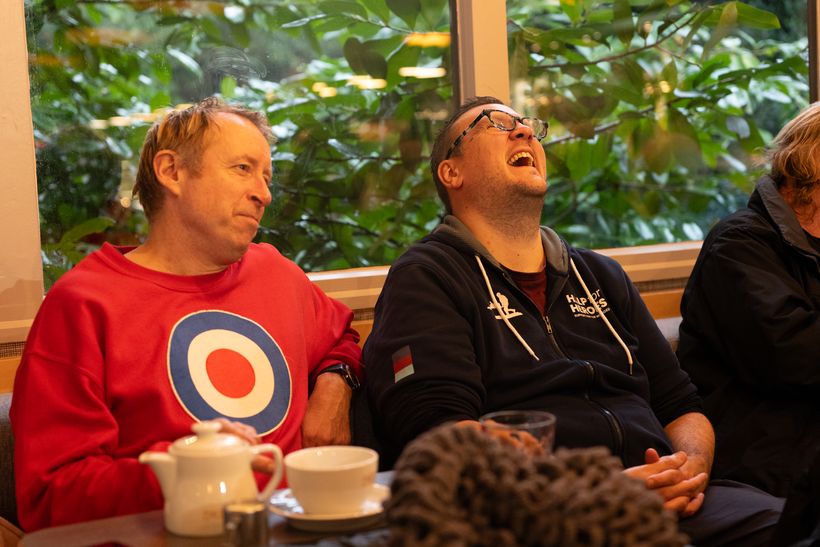
“They helped me socialise again,” Rob says. “They put me back on the straight and narrow. They started making me feel human again.”
Rob began attending coffee mornings with other veterans in Leeds. He likes them – the people, the camaraderie, the shared understanding – but something didn’t quite fit.
“There’d be 40 people there, really cool guys, sitting around having a coffee,” he says. “But I’m too young for that schnizzle. I wanted to do stuff.”
Checking in on one another
Rob wanted something more active, but accessible, and more social – something that might also mix veterans of different ages and regiments, rather than keeping everyone in familiar silos.
So he sent a message.
“I basically WhatsApped a few people and said, ‘I’m going for a walk. I want you guys to come with me. We’re meeting here, at this time. Hopefully see you there.’ That’s how it started.”
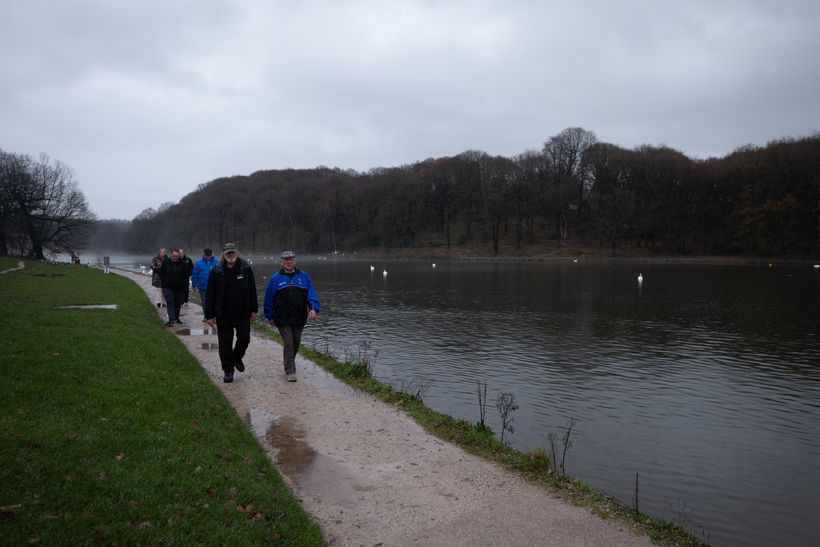
That simple invitation became Nodders and Plodders – a monthly, gentle walking group around Leeds’ parks. These days, between six and twelve people turn up regularly: veterans ranging in age from their mid-40s to their 80s. Sometimes they bring their partners. Sometimes their dogs.
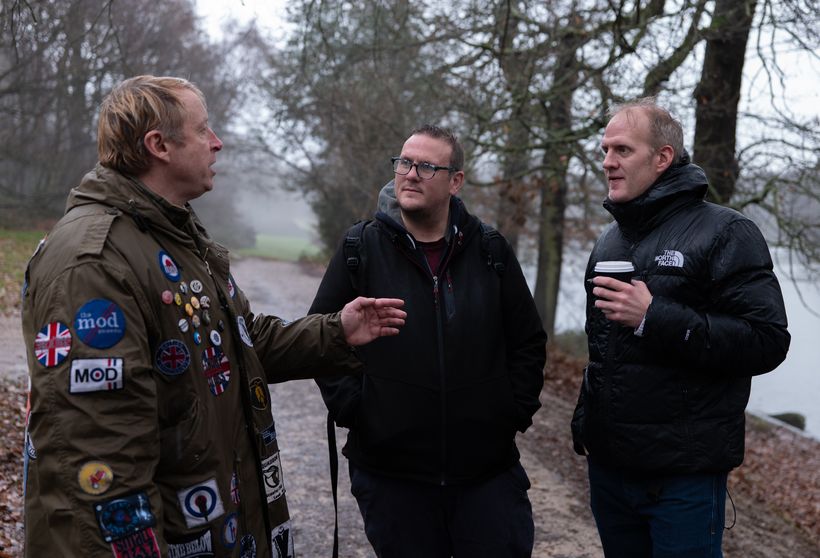
“We always end up breaking into groups,” Rob says. “There’s a faster group, a slower group, a middle group. The faster ones wait, check in on the slower lads. It forces that social interaction, and I like that.”
The conversations don’t follow an agenda.
“Sometimes it’s about physical health. Sometimes mental health comes up. Sometimes it’s military stuff. Sometimes it’s just day-to-day life. I’m really keen that it’s not just a mental health group,” Rob says. “I don’t want people thinking, ‘Well, I’m not struggling, so I don’t need to be there.’ It’s a social thing first and foremost.”
The name reflects that spirit.
“I didn’t want it to sound aggressive or military,” Rob explains. “The ‘Plodders’ is the walking bit. The ‘Nodders’ - I like the idea that if we’re watching a film and someone nods off, that’s fine. It’s meant to be relaxing.”
'I want people to feel part of a team’
The walks quickly became more than walks. Rob sometimes writes quizzes for afterwards. He’s organised trips to art galleries, with a visit to a museum planned next. Ideas for spin-offs include barbecues, camping trips, a radio show and photography courses.
“I don’t want to just sit around drinking coffee,” he says. “I want people to feel part of a team.”
Behind the scenes, Rob is being supported by Matt, a Community Builder at Help for Heroes. Matt’s role is to help veterans find – or create – activities and social opportunities in their local area to reduce loneliness and isolation.
“Rob’s the perfect example of someone who wanted to do something and just needed that bit of confidence,” Matt says. “All I’ve really done is say, ‘You can do this. I’ll support you, but you don’t need to rely on other people.’”
This has changed my life
For Rob, that support has been transformative – not just for the group, but for his own confidence.
“Nodders and Plodders is changing my life. Volunteering for Help for Heroes is changing my life.
“It's making me more confident, it's teaching me organisational skills. It's putting things in my diary.
“When I first suggested the walking group, my ability to talk to groups wasn’t there. Now I’m making announcements in front of 40 people.
“I do still struggle with my mental health sometimes. It’s an ongoing process, but Nodders and Plodders is definitely one of the things that helps.”
The ripple effect
As both a physical health and mental health first aider, Rob is often the person that others turn to.
“People say to me, ‘I feel a bit shit today,’ and I can say, ‘Yeah, I know how that feels – some of my days are rocky too,’” he says. “Sometimes there isn’t an answer. Sometimes just knowing someone else feels the same way and isn’t going off the rails – that’s the medicine.”
What he enjoys most is seeing the ripple effect.
“Just knowing that some of these old guys are getting out and interacting – and I’ve caused that,” he says. “Even outside the walks, people are checking up on each other.
“I've had one member today saying he wouldn't have done anything today if this wasn't on, which is really powerful.”
And that is crucial because the problem of isolation within the veteran community is a dangerous one.
"Isolation can have a major impact on someone’s life – not just their mental health, but their physical health too,” says Matt. “Rob has, without knowing it, inspired and influenced a whole load of the veteran community. He is somebody who sees a problem, and rather than just moaning about it or complaining about it will say, 'Okay, let's change it. Let's do something about it.'
“That sort of grassroots, organic development of a community is so powerful, because it will exist for longer than me being around, this work being around. It's got the potential for it to go as long as possible.
“The informal, casual approach of Nodders and Plodders means that people can relax.
“It’s allowed people to come together to meet new people, to socialise and to connect.”
For Rob, that’s the point.
“I’m kind of doing what Matt does – with Matt’s guidance,” he says. “Getting people involved. Doing stuff. Building something.
And it all started with a walk.