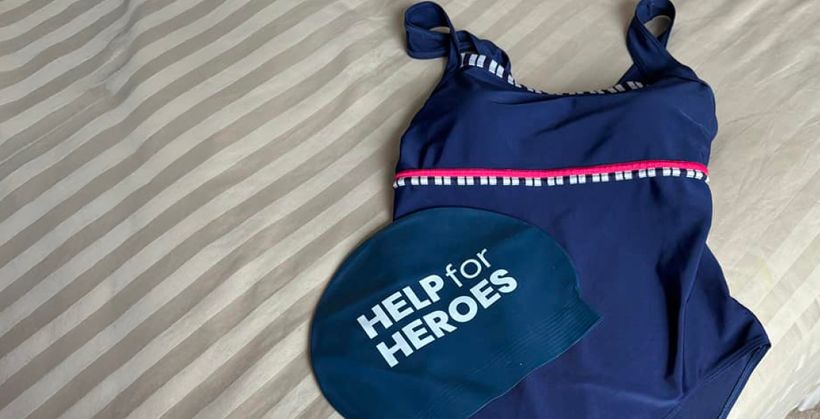


Michelle's Story
Updated on
When Michelle was diagnosed with multiple sclerosis, in her own words, she gave up. “I literally sat at home waiting for my body to stop working.”
The Royal Navy veteran lived quietly with her two dogs, and apart from them, she was isolated and alone. Depression and anxiety took hold, and her world slowly shrank to the four walls of her house. She found herself in a bleak situation she couldn’t see a way out of.
That’s when she found support from Help for Heroes – and swimming. And the difference to her life, she says, has been “massive”. “I’ve found my drive again.”
I think I just gave up...healthcare professionals were telling me what I couldn’t do. No one told me what I could do."
Royal Navy Veteran
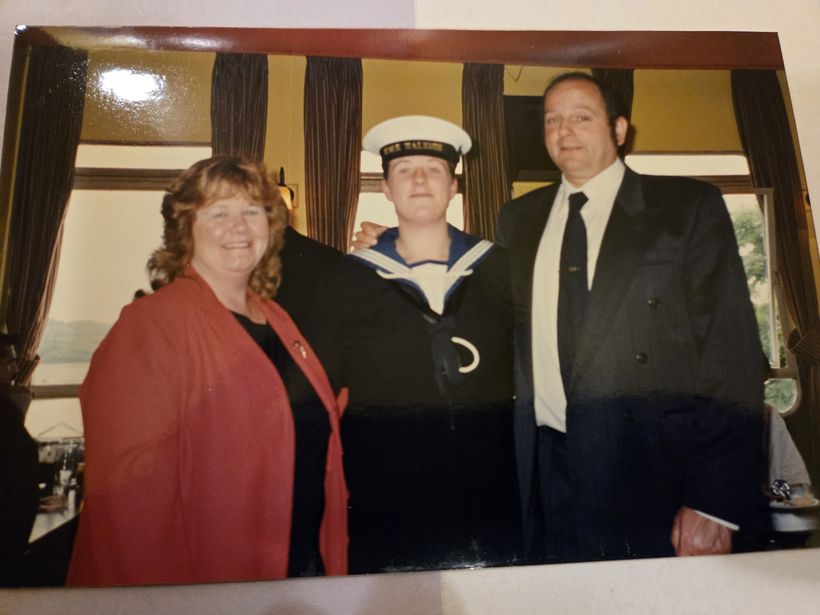
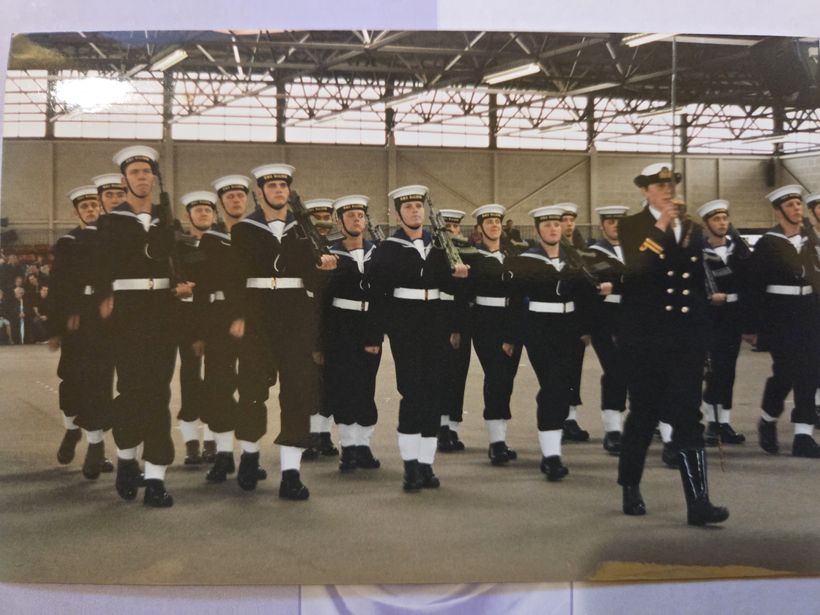
Michelle joined the Royal Navy in January 2000. Right at the beginning of her career, she slipped on a polished floor, put out her hand to break the fall, and suffered a devastating shoulder injury.
“I tore everything in my shoulder and fractured a bone,” she explained. Several surgeries followed, including the removal of the end of a shoulder joint and a later operation to cut and regrow the tendons. The injury eventually led to her medical discharge from the Royal Navy in 2005.
Losing her career hit her hard. But she found new purpose joining the Ministry of Defence Guard Service, where the routines and familiar structure of military life still surrounded her. She stayed for 10 years.
“When I came out and didn’t have people around me or a routine, I struggled,” she said. “Working on a military camp, wearing a uniform, it was like I was still in. When I left there, that’s when things got hard.”
Around her ninth year in the MOD job, Michelle began feeling unwell. She didn’t yet know it was MS – that would come after a seizure, a brain scan revealing lesions, and then years of testing. When the redundancy notice arrived, it removed not just her job, but the last framework holding her life together.
“I think I just gave up,” she said. “At that point, healthcare professionals were telling me what I couldn’t do. No one told me what I could do.”
Finding Help for Heroes
The turning point came when Michelle’s GP referred her to a social prescriber, who encouraged her to try a veterans’ hub. Terrified to attend, she dragged her mum with her. She cried at that first meeting – overwhelmed, anxious, completely outside her comfort zone.
But she also met people who understood. People who wanted to help.
Through Help for Heroes, Michelle began receiving support from across the charity. Her Case Manager, Larry, helped her navigate practical needs. Occupational Therapist Louise sourced essential equipment – a spring‑loaded brace for her drop foot, kitchen aids to help with grip, and a riser-recliner chair that transformed her comfort at home.
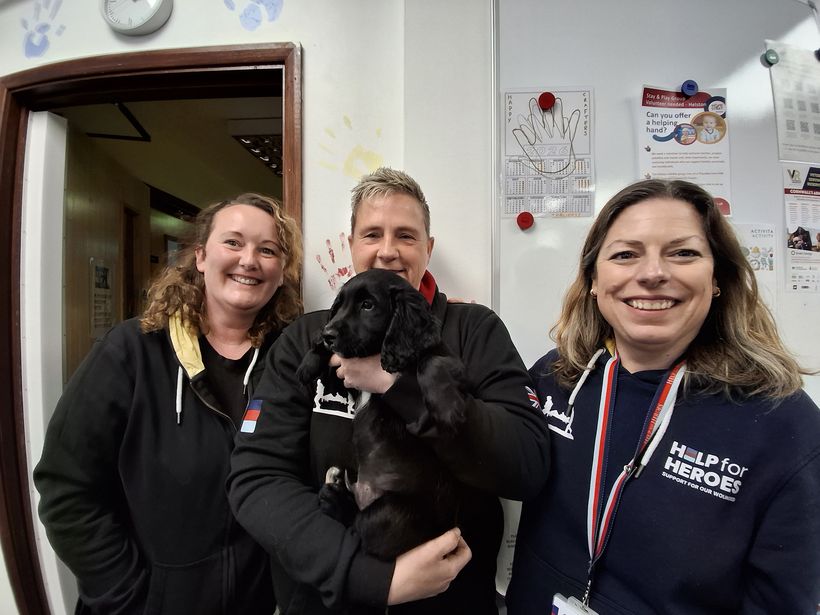
But the biggest shift happened when Michelle met one of the charity’s Veterans’ Community Nurses, Claire, at a hub in Redruth.
They bonded instantly over their love of dogs. Soon after, they arranged a dog walk together. On that walk, talk turned to swimming – something Michelle missed but felt too anxious to attempt alone.
Claire didn’t hesitate.
“She offered to go swimming with me,” Michelle said. “And that changed everything.”
The Power of the Pool
Since then, swimming – and the time she spends in the water with Claire – has become the cornerstone of Michelle’s recovery.
Help for Heroes also funds weekly hydrotherapy sessions that build her strength.
Every week, Michelle meets Claire 40 minutes beforehand for a coffee to update her clinical recovery plan. Then they get into the pool – their “little corner”, as Claire affectionately calls it – and talk.
“We literally set the world to rights,” Claire said. “In the water, it’s relaxed. That’s when the softer conversations happen.
“We talk about diet, we talk about exercise, we talk about Michelle's physical health, mental health. All the time I think because you're in the water, it's a lot more relaxed.
“And Michelle swims for a good hour. At the end of it I’m shattered.”
And crucially, that relaxed space helped Michelle open up about deeper struggles. Through those conversations, Claire referred Michelle to Help for Heroes’ Hidden Wounds service, where she now receives mental health support.
The changes have been remarkable.
“I feel like a normal person in the pool,” Michelle said. “Outside, I can fall over. I trip. In the pool, I don’t fall. I can just be me.”
I feel like a normal person in the pool. Outside, I can fall over. I trip. In the pool, I don’t fall. I can just be me."
Royal Navy Veteran
Her confidence has grown alongside her physical strength. Claire has watched her walk further, push herself more, and slowly start believing in what she can do.
A milestone came recently when Michelle, for the first time, went to a swim session on her own. Claire couldn’t make it due to another commitment – but Michelle still went.
“That was all driven by her,” Claire said proudly. “An absolutely massive achievement.”
It came just weeks after the heartbreak of losing one of her beloved dogs.
“Having swimming, hydrotherapy and the support has meant I’ve got through it so much better,” Michelle said. “It gave me something else to focus on.”
A future she couldn’t see before
Life for Michelle now looks completely different.
“I used to sit in the house and the only thing I ever did was take the dogs out,” she said. “Now I go swimming. I go to hydrotherapy. I go to Slimming World. I’ve got things to aim for.”
She sees progress everywhere – in the pool, in her balance, in her strength, and in her mindset.
“When I first got in the pool, I struggled to get out. Now I can. I don’t want to use the lift while I can still do things. And I haven’t fallen as much. It’s a massive boost.”
She now dreams of walking to the local shop with just her brace – no stick. A dream she would never have believed possible a year ago.
“I had given up,” she said. “But now I have my drive back.”
Operation Swim - “You’re giving people hope”
Help for Heroes’ Operation Swim challenge is taking place throughout June. Participants will swim the length of one, two, three or all five of the D-Day Normandy beaches in the month.
They will be raising vital funds to support veterans just like Michelle on their physical and mental recovery journeys.
She wants everyone taking part to know just how much their efforts mean.
“I want to say a massive thank you to anyone taking part in Operation Swim,” she said. “The support I’ve had has made my life so much better. And that’s only possible because of people’s fundraising. If it wasn’t for Help for Heroes, I don’t know where I’d be. I can see a future now. Before, all I could see was MS. Now I can see hope. You’re giving people like me happiness and a chance to live again.”