


Content warning: This article contains graphic descriptions of war, death, violence, trauma, children in combat, and references to suicide.
Gareth spent more than three decades walking towards danger.
As one of the Army’s leading bomb disposal experts, he became used to the so-called “long walk”. The nerve-shredding solitary approach to a suspected explosive device that could end his life in an instant but save dozens of others.
Born and brought up in Newcastle upon Tyne in a working-class family, he learned early the value of hard work and determination. Those qualities took him all the way to the Royal Military Academy Sandhurst, where he excelled, before he rose through the ranks of the British Army to brigadier.
Gareth served in Northern Ireland, Kosovo, Iraq, Afghanistan and other less publicised conflicts, where he dismantled weapons, trained troops, commanded multi-national bomb disposal teams and advised allies. Those same experiences left him with invisible wounds that nearly destroyed him.
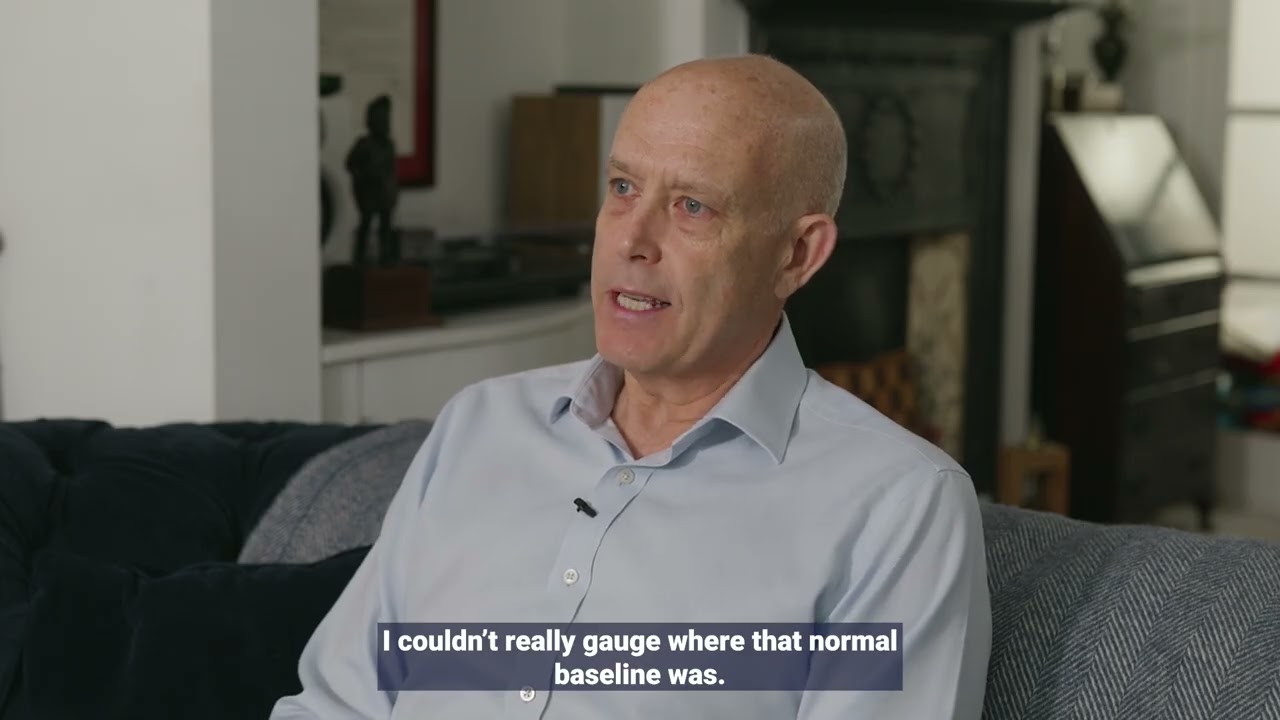

The wounds you can’t see
It’s little surprise that such service left its mark. What’s more shocking is how long it took for that mark to be acknowledged – and how hard Gareth had to fight for help. Only after counselling from Help for Heroes did he begin to rebuild his life.
The first trigger came in Kosovo in 2000, where he oversaw the exhumation of mass graves.
“I think that’s what started my PTSD for real,” he says. “Then you take that through years of bomb disposal, and a case in point was one of many large market bombs in Iraq. There were broken bodies everywhere, men, women, children and babies. My senses couldn’t really take that in.
“Three days later I flew into Brize Norton, was given the keys to my hire car and drove home. I went straight back to my family and had to pretend nothing had happened. It was very difficult to do.”
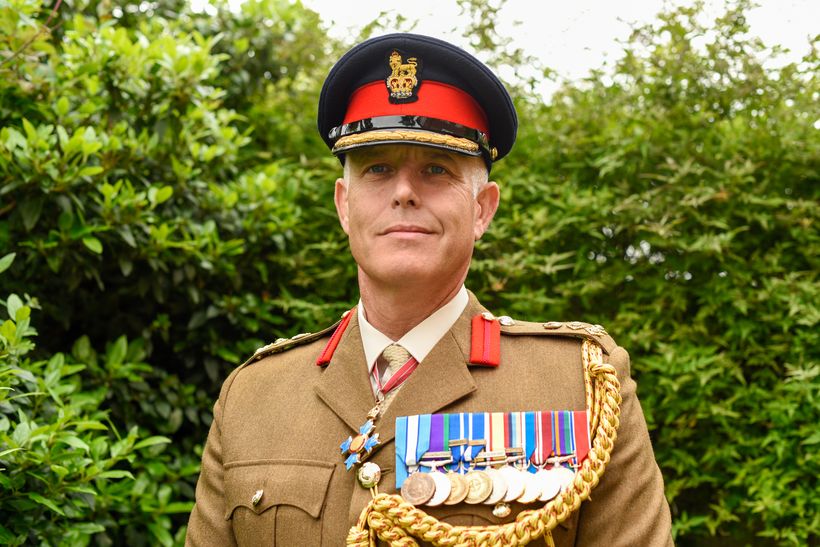
Living with the aftermath
The emotional weight built up. Gareth gave evidence at dozens of inquests into deaths caused by IEDs. “When a soldier described a situation they were faced with in combat, I felt physically as if I was next to them, going through that sequence of events because I had been there and seen it for myself,” he says. “It took its toll.”
His dreams became filled with the aftermath of huge bombings and the faces of the dead. “Training allows us to cope with fear, but the emotion endures,” he explains. “Like so many of our friends and colleagues, I just got on with it.”
At home the cracks showed. He grew irritable with his wife, Chris, and their two daughters, trivialising their everyday worries compared to his own.
“I never looked at each trauma,” he admits. “I locked those appalling memories away in a ‘suitcase’, hoping my thoughts and feelings were transient.
“But then I dropped the suitcase, and the awful memories came tumbling out – it had become so heavy and full that I was no longer able to repack or close it. I found myself back in Kosovo, standing once again among the slow procession of the living identifying the dead, the air filled with the sound of raw grief and the pungent smell of death, on a dewy spring morning.
“Then, just as vividly, I was back in Iraq, kneeling beside two young boys – “Cubs of the Caliphate” – who lay still beside an adult fighter. All three wore suicide vests. The two children were physically chained to their ‘minder’, their fate had been sealed.
“What struck me was that there was no choice given to them, they weren’t willing volunteers. Their faces showed abject fear as opposed to the tranquillity of martyrdom.
“In that moment, the past and present collided. The faces of those boys brought back every life I couldn’t save during my career, every moment when courage hadn’t been enough.
“For years I had walked towards danger to protect others, but now the weight of those memories had turned inward, threatening to destroy me.”
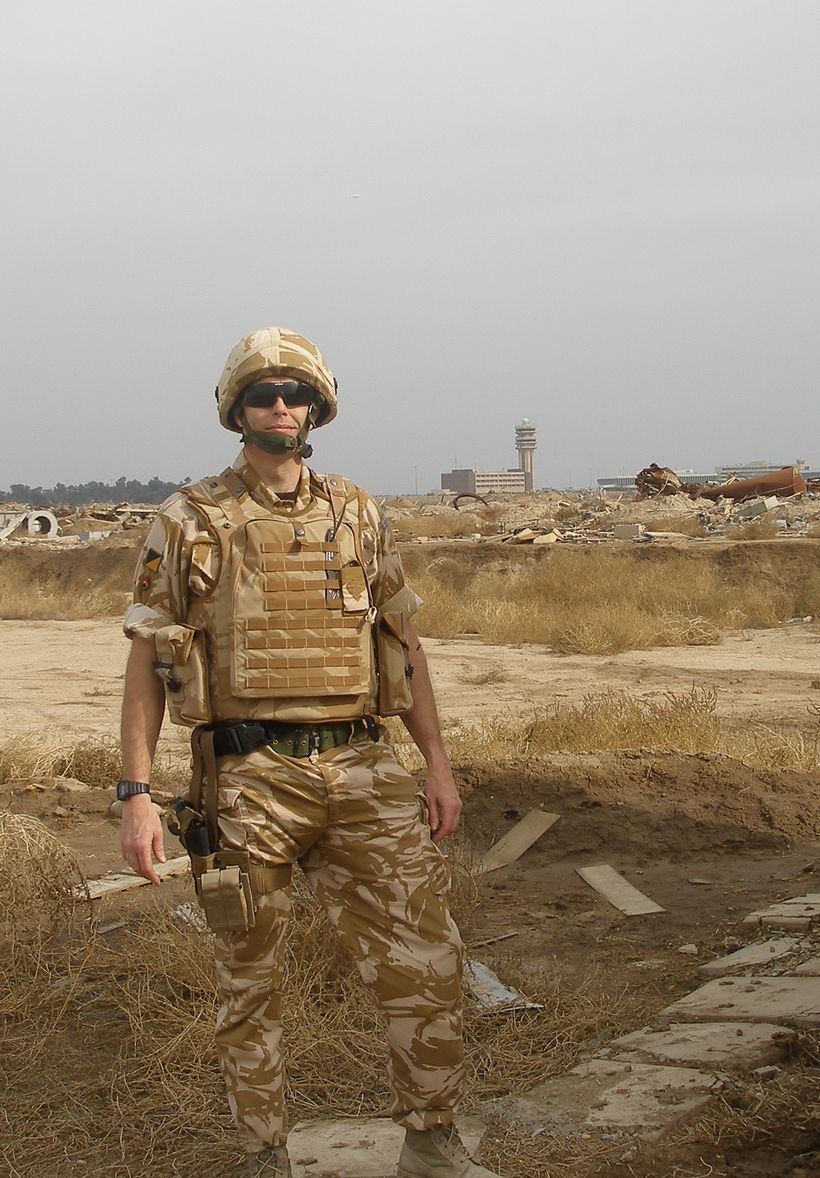
When Gareth retired in 2018 – three years early because, as he put it, “my mind and body had had enough” – he didn’t declare his mental health problems. Others who said they had PTSD had been medically discharged. Some took their own lives.
“Many of my bomb disposal colleagues and friends who declared PTSD seemed to be punished for doing so. I kept quiet, living with the shame and thinking I would be fine.”
The suitcase bursts open
But Gareth wasn’t fine.
In early 2023, a triggering incident at the university where he is now Executive Director of specialist programmes caused the 'suitcase' to burst open. The dreams returned with a vengeance. One night, his wife, Chris, woke to find him reliving a nightmare from Kosovo. “She began to cry,” Gareth says softly. “She said, ‘I can’t go through this again.’”
It was a turning point. He reached out for help – to the NHS, then back to the military. “It felt as though I was on a piece of elastic between different organisations, which offered direction to unhelpful websites,” he says.
“If I ever felt suicidal, the best advice was that I should read the literature then ring someone. My PTSD never made me feel suicidal; I just wanted peace from the dreams.”
The lowest moment in his life was yet to come. Gareth is a keen clay pigeon shooter. After declaring his mental health condition, his shotgun licence was revoked. A beloved hobby which he enjoyed while relaxing with friends was no longer allowed.
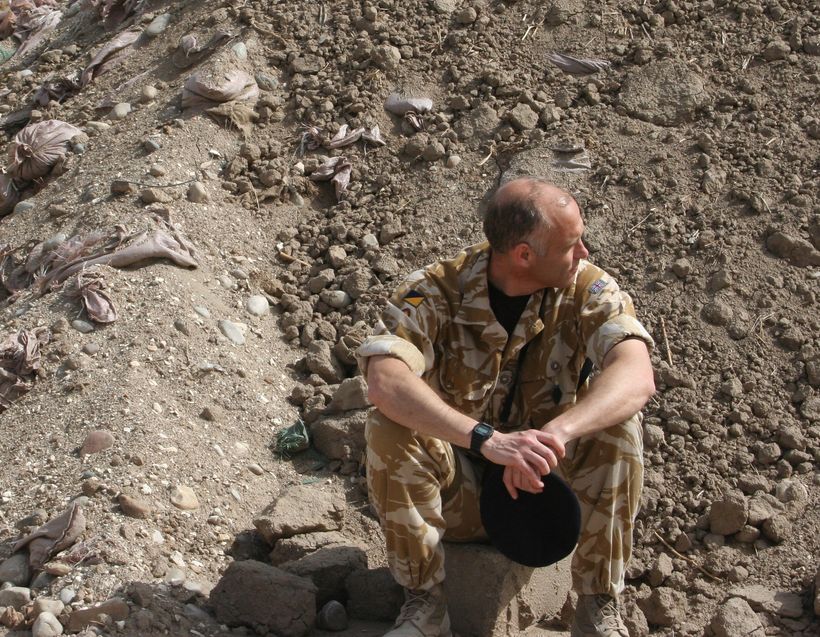
Survivors’ guilt
“My feelings of shame and guilt come partly from survival – when 44 of my multinational colleagues were not so fortunate – from trying to answer many ‘what ifs,’ and from sending so many explosive ordnance disposal and search operators to Afghanistan. I am often reminded of the number of lives I did save, one citation read ‘countless’, but that didn’t seem to help.”
Salvation came through a friend. Gareth reached out to a former Special Forces colleague who had attempted suicide. That colleague suggested he get in touch with Help for Heroes Hidden Wounds mental health programme.
“This is aptly named,” Gareth says. “To look at me there is no physical damage, but there are parts of me left behind in those conflicts.”
He was matched with a counsellor called Theresa. “She helped me examine items within the ‘suitcase’ and reflect at the right pace. This would not be possible in an NHS clinic where my personal experience was that there was a lack of understanding of how to talk to people from a military background within that setting. There was also the problem of security classification. How could I have talked to them about sensitive operational activity?”
Healing hidden wounds
Slowly, Gareth began to heal. “Help for Heroes and Theresa gave me a purpose to carry on,” he says. “She saved my marriage. She saved my relationship with my daughters.
“She was able to listen to me talk about a lot of what I went through in my military career.
“One of the things you have to do with PTSD is talk about the trauma and how it occurred, why it occurred, and what you thought at the time. Why it made you react. I was able to go into detail with Theresa about events I’d been to and things I saw. And that really helped me. I discovered that the principal issues involved not wanting to fail. Not wanting to be seen to be weak.”
We have a bow wave of people affected from Iraq and Afghanistan all walking into an NHS system already overburdened with problems they may not understand
Veteran
Purpose restored
Today, Gareth channels his expertise into academia. He leads the UK’s only munitions and explosives apprenticeship course at the University of Wales Trinity Saint David and completed a PhD on regulating the chemicals used to make improvised explosives – work inspired partly by the 2017 Manchester Arena bombing. His findings have already been adopted by the UN and Interpol.
In recognition of his service in Afghanistan, Gareth received a CBE from the late Queen. Yet, he is modest about his achievements.
What helps, he says, is purpose – and honesty. “I denied my PTSD for many years. I saw myself as weak. But it’s not weakness; it’s a wound. And wounds need treatment.”
A voice for those still struggling
Gareth believes his story shows the gaps in the UK’s care for veterans. “If I, as a brigadier, struggled to find the help I needed when I had a powerful voice and moved around people of influence, I worry for Private Jones or Private Smith.
“We have a bow wave of people affected from Iraq and Afghanistan all walking into an NHS system already overburdened with problems they may not understand,” he says.
“There is no defined timeline to presentation of veterans’ mental health issues, and a better roadmap must be identified. It is simply not appropriate to provide links to helplines or to rely on the NHS, who are unable to unpack our history without the context. Help for Heroes has expert counsellors who can talk to people who have served in the military. They understand.
“Help for Heroes gave me the chance to open that suitcase. They’ve helped me start to put things back in order. I’m still healing – but at least now, I’m not carrying it alone.”
- If you’re a veteran or family member and have been affected by anything you’ve read or watched and would like some support, please complete our Get Help form. For out of hours support contact the Samaritans’ veterans line on: 0808 175 3075.
- If you’re not a veteran or family member, and you've been affected by anything you’ve read or watched, call the Samaritans on 116 123. If you’re in the Republic of Ireland call 1850 609090.
Updated on