

Veterans' stories from Iraq, 10 years on
Updated on
It's 10 years since the last British troops withdrew from Iraq.


Updated on
For immediate support in an emergency please call 999. To access confidential emotional support for feelings of distress, despair or suicidal thoughts - Samaritans freephone 116 123 (24/7) or email jo@samaritans.org
If you've been affected by any of the themes in this content, we're here for you. Please get in touch.
We support all members of the Armed Forces community with their physical and mental health and a range of welfare issues.
The Gulf War was a United States-led coalition war against Iraq, with its main combat phase known as Operation Desert Storm. It took place at a key moment in history, just after the Cold War, when the Soviet Union was breaking apart. During this time, the United States and the Soviet Union briefly cooperated rather than competed, showing a shift in global politics.
The First Gulf War began with Iraq’s invasion of Kuwait. On 2 August 1990, Iraq’s leader at the time, Saddam Hussein, ordered Iraqi troops to invade and occupy their neighbouring country.
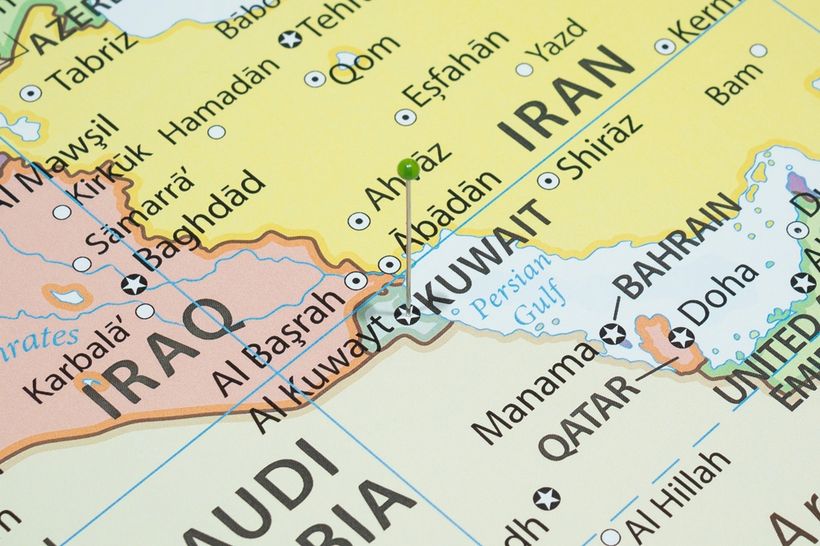
One of Hussein’s main aims was to deal with Iraq’s huge debts following the Iran–Iraq War. Iraq owed Kuwait and other Gulf states around $37 billion, and when Kuwait refused to forgive these loans, Hussein sought to remove Kuwait as an independent state and avoid repayment.
Oil was another key motive. By taking control of Kuwait, Iraq would gain access to its large oil reserves, significantly increasing its share of global oil production and strengthening its economic position.
Globally, the invasion was seen as a threat particularly because it threatened global oil supplies and regional stability in the Middle East. The United Nations (UN) demanded an immediate withdrawal and imposed a trade embargo to put economic pressure on Iraq.
They gave Iraq a withdrawal deadline of 15 January 1991. When Iraq ignored this, a US-led coalition of 34 countries launched Operation Desert Storm, marking the beginning of military action in the Gulf War.
The armed conflict was between Iraq and a coalition of 34 nations, including NATO members and Arab states.
Leading the coalition, the United States was involved in the Gulf War the most. However, the United Kingdom was also heavily involved, through their code name Operation Granby, deploying over 53,000 men and women across air, land and sea. France also played a significant role, providing 18,000 troops
Lasting from 2 August 1990 until 28 February 1991, the Gulf War spanned across six months. The war had two main phases - Operation Desert Shield and Operation Desert Storm.
The first phase lasted until 17 January 1991. Following Iraq’s occupation of Kuwait, this initial phase of the Gulf war aimed to defend Saudi Arabia – a neighbour of Kuwait and an ally of the US – from potential invasion.
The second phase of the Gulf War began on 17 January 1991 and aimed to liberate Kuwait through military action.
After Iraq invaded Kuwait, Resolution 660 was adopted by the UN Security Council. The UN saw the invasion as a breach of international peace, and the resolution immediately ordered for Iraq to withdraw their forces.
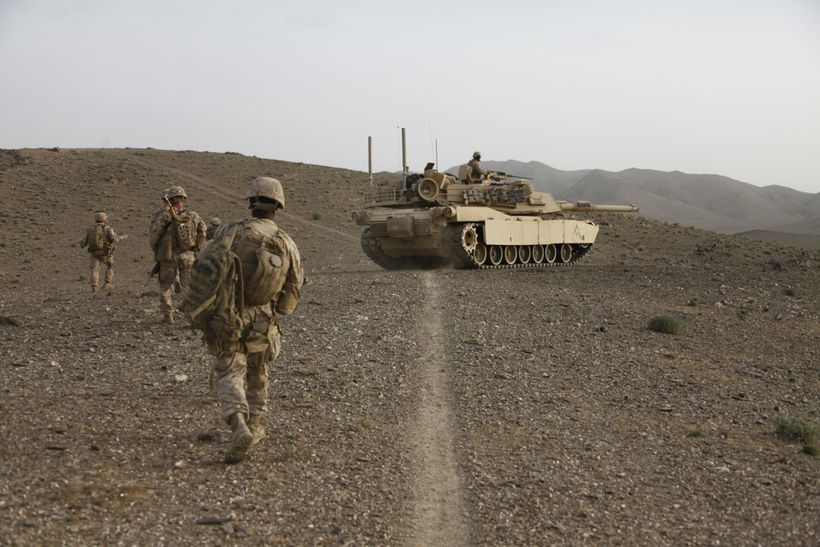
Saudi Arabia was also at risk of being invaded due to their proximity to Kuwait. The US Secretary of Defence and the commander of US forces in the Middle East began planning for operations to defend Saudi Arabia.
The United Nations told Iraq to leave Kuwait in Resolution 660, and repeated this in later resolutions, but Iraq still refused. On 29 November 1990, Resolution 678 set a deadline of 15 January 1991 for Iraq to withdraw. It also said that if Iraq did not leave by then, countries could use ‘all necessary means’ to remove Iraqi troops from Kuwait.
As the US military was already building up in Saudi Arabia, and the withdrawal deadline was only a few days away, the US Congress authorised the use of military force.
15 January was a turning point in the Gulf War, as this was Iraq’s deadline from the UN to withdraw their troops from Kuwait.
John Major, the UK Prime Minister, addressed the House of Commons stating that they were prepared for war.
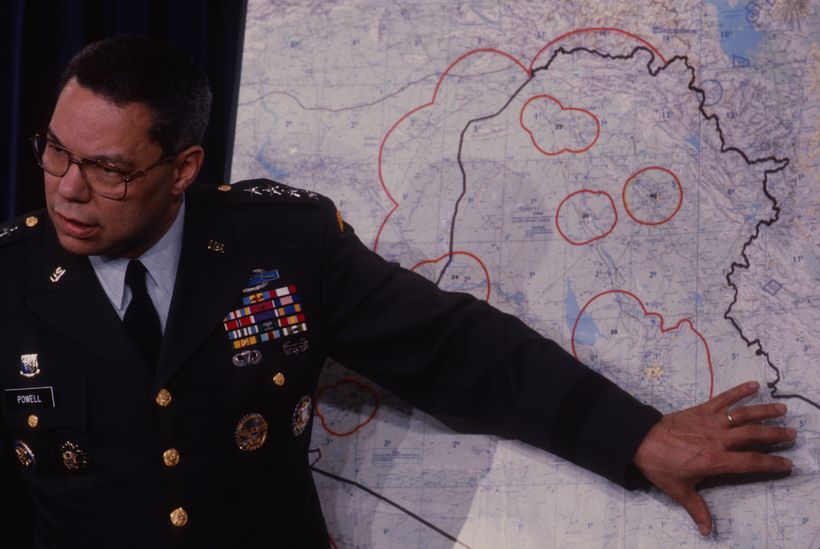
As the UN’s deadline had expired and Iraq was still occupying Kuwait, Operation Desert Storm was launched. An air and navy campaign began to expel Iraqi troops. This lasted for five weeks, damaging Iraq’s air defences as well as their military, oil and transportation infrastructure.
Iraq responded by launching missiles against Israel to bring them into the conflict, as well as Saudi Arabia. Hussein believed the Arab states wouldn’t want to be seen as fighting alongside Israel due to historical conflicts and would therefore withdraw from the Gulf War.
The focus from the US and allied forces moved onto Iraq’s ground forces. They crossed into Iraq and Kuwait on 24 February.
A barrack used by US troops in Saudi Arabia was destroyed by a Scud missile fired from Iraq, and 28 Americans were killed with a further 100 wounded.
Hussein announced that Iraq would withdraw from Kuwait, but it still had not fully complied with other UN resolutions, such as recognising Kuwait’s independence and following all UN demands.
As Iraqi forces began withdrawing from Kuwait along the main highway to Iraq, coalition forces launched attacks that killed hundreds of Iraqi troops. The road later became known as the Highway of Death.
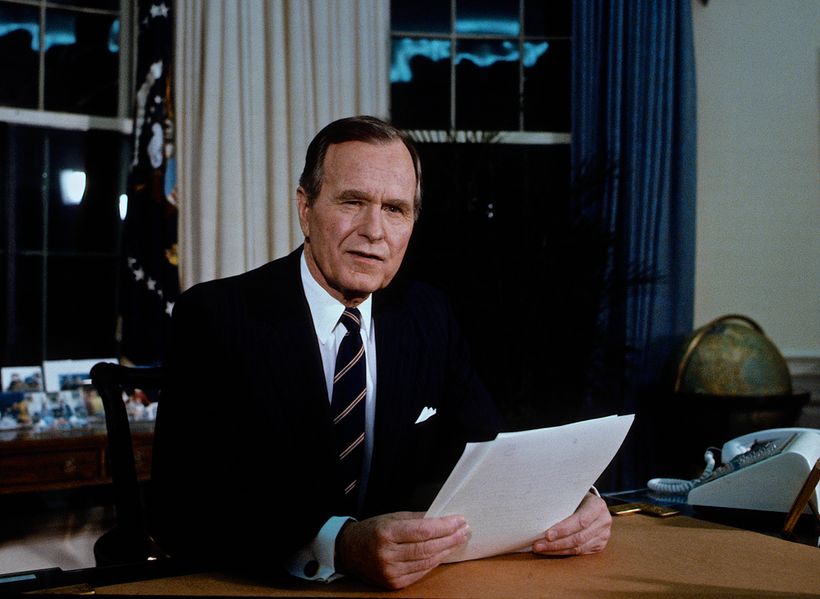
27 February 1991 marked a Gulf War victory as coalition forces secured and liberated Kuwait City. A cease-fire, effective as of midnight, was announced by President George H.W Bush.
Following their retreat from Kuwait, Iraq accepted all 12 resolutions made by the UN.
During the Gulf War, 392 personnel from the coalition died, including 47 British troops.
Exact figures for Iraqi military deaths are unknown but estimates range from 20,000 to 100,000, with approximately 3,000 civilian deaths resulting from the air and ground campaigns.
A ceasefire was announced at the end of February 1991, when Iraq retreated from Kuwait and agreed to follow UN resolutions. However, the formal ceasefire was established on 11 April 1991 through Resolution 687, which officially ended the First Gulf War.
We help veterans, their relatives, serving personnel, reservists, and people who worked under UK command to live well after service. If you need support, please get in touch with us via our online form or by calling our friendly helpline team on 0300 303 9888.
We also host free activities and events across the UK so you can spend time with other veterans and find activities to enjoy in your community
Updated on
It's 10 years since the last British troops withdrew from Iraq.
Updated on
"The month before I deployed, we found out my wife, Jennifer, was expecting our third child.
Updated on
All about the Afghanistan War, including how it began, who was involved and how long it lasted.
Updated on
Explore the key events and impact of World War One, and how the first global conflict changed the world
Updated on
The key events which took place in the World War II, including the cause of the war and the impact it had worldwide.